
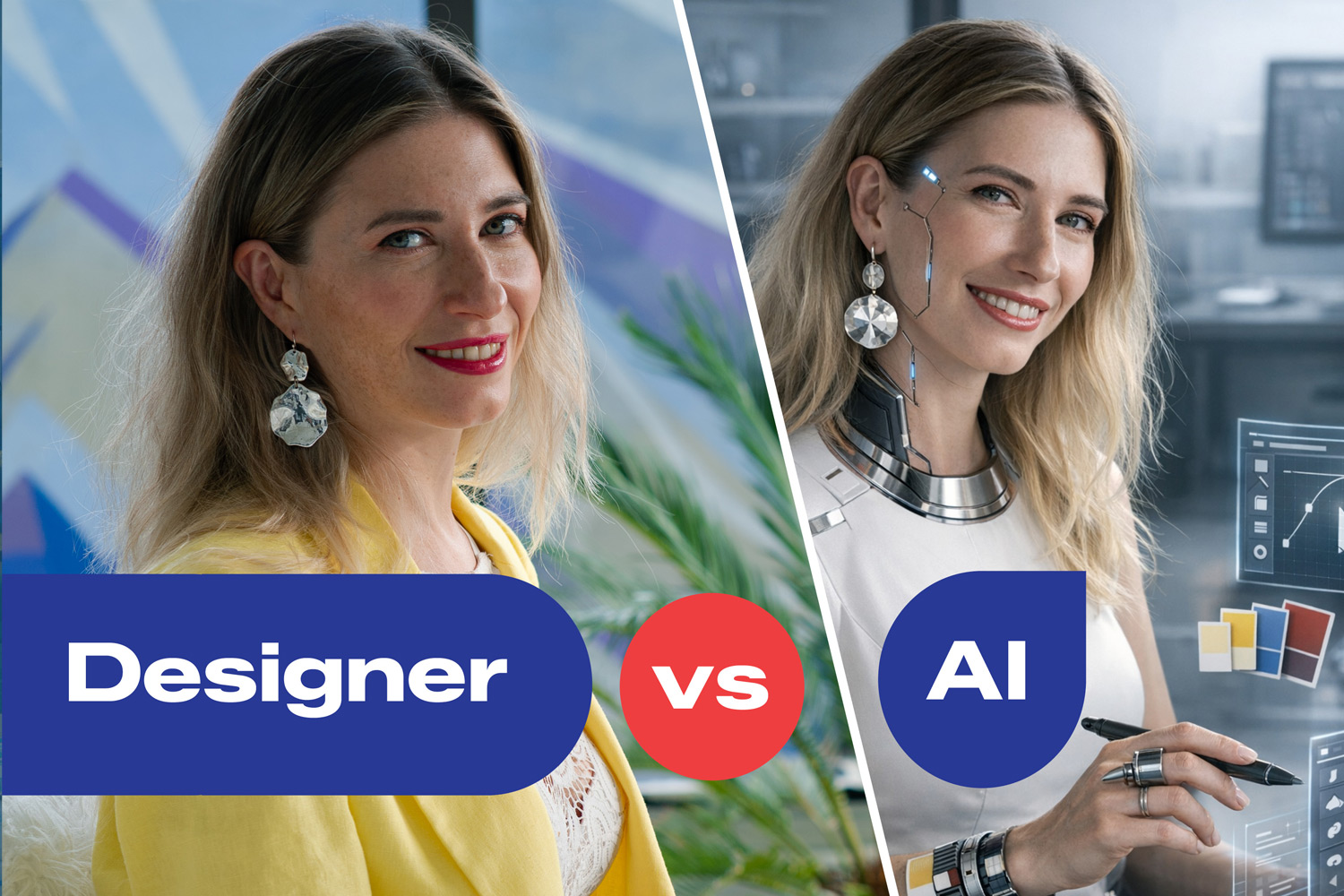
I’ve been seeing a lot of designers feel stuck when a client sends over an AI-generated logo and asks them to build on it. Some feel lost trying to reverse-engineer a style. Others feel frustrated — understandably — wishing the client had come to them first.
Both reactions make complete sense. But I want to offer a reframe.
If we’re only competing on visual aesthetics, we’ll always be up against something – AI, a Canva template, someone who just discovered Midjourney. That’s a race with no finish line.
As Paul Rand famously put it, “A logo does not sell — it identifies.” A great logo is a visual shortcut that connects audiences to a brand’s values, voice, and presence. The Nike swoosh doesn’t describe an athletic shoe. The Apple mark doesn’t explain a computer. Yet both communicate everything. A logo is not decoration – it is the visual gateway into the soul of a brand.
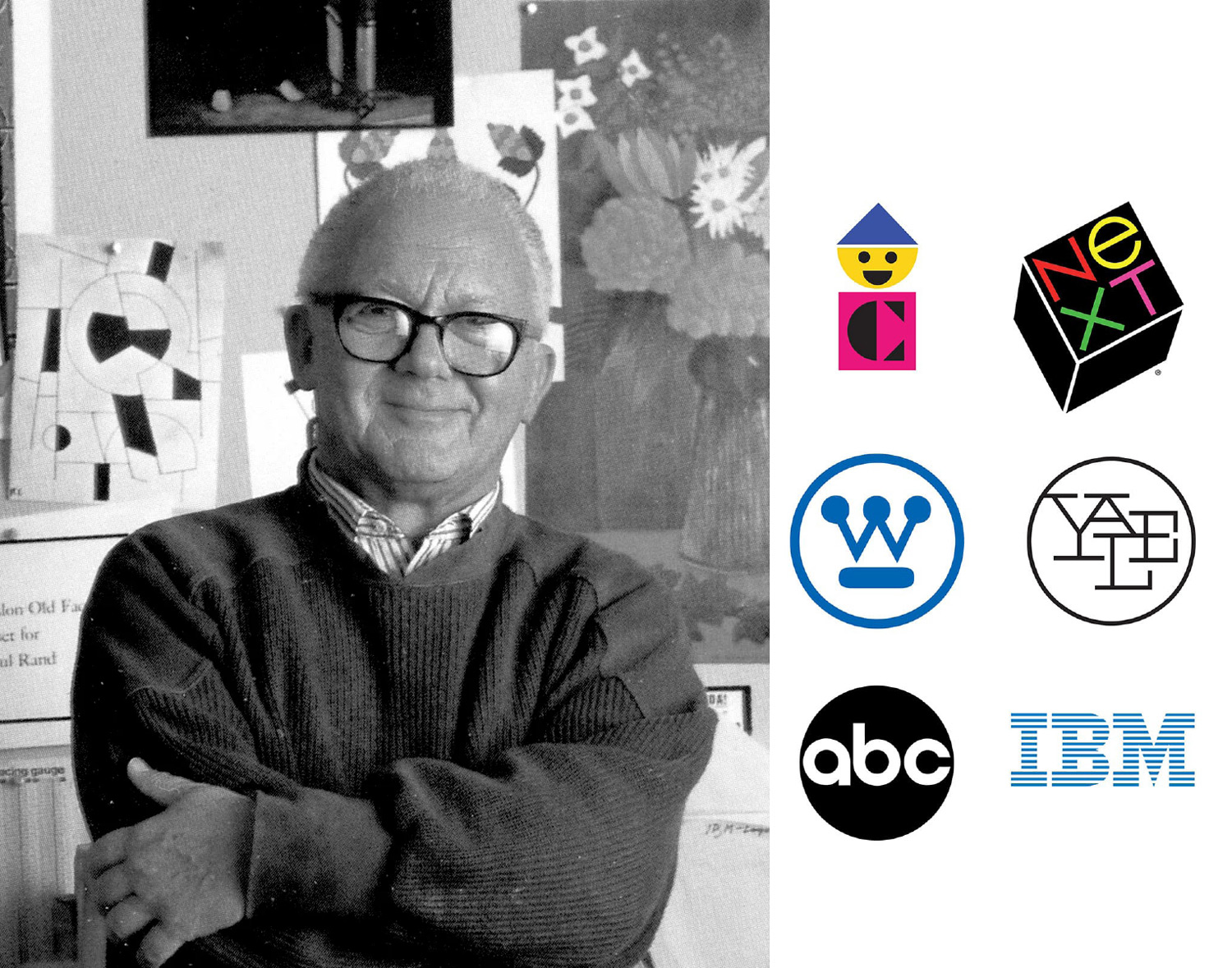
Paul Rand logo designer with his iconic brand identity work including IBM, ABC, NeXT, Westinghouse, and Yale logos
What AI Can’t Ask Before Designing a Logo
Before designing a logo, a thoughtful designer spends time asking: What emotions should this evoke? What message should it reinforce? Who is this for, and why does this brand exist?
This is where designers have an edge — but perhaps not for the reason most people assume. You might think AI falls short simply because it isn’t human. And that’s partly true. But AI has been trained on billions of human expressions — culture, geography, religion, lived experience. In some ways it has been exposed to more of the human story than any one designer ever could be.
The Real Difference Between a Designer and AI
Our real edge is presence. We sit across from a specific client, in a specific moment, navigating real context. We ask questions, read the room, catch what isn’t being said, and build a relationship with the brief over time. That’s not pattern recognition — that’s accountability, dialogue, and judgment. And that’s what no model can replicate.
Effective logo design isn’t a visual exercise – it’s a strategic one. To create a true identifier for a brand, we need to understand the mission, the audience, the business model, and what this brand actually means to the person who built it. That depth doesn’t come from a prompt. It comes from a conversation.
How the Role of a Logo Designer Is Evolving
As the design landscape shifts and stunning graphics become available to everyone in seconds, our role is evolving. We’re becoming educators and strategists as much as we are makers. And when we show up that way – asking the right questions, guiding the process – clients naturally begin to see that the AI-generated concept is a starting point, not a solution.
Is There a Place for AI in Logo Design?
Absolutely. It’s genuinely useful for research, ideation, and exploring visual directions quickly. But it’s on us to distil what’s functional, what’s meaningful, and what actually works.
Stop Comparing Yourself to AI
And maybe the most important shift is this – we need to stop comparing ourselves to AI altogether. The moment we position ourselves against it, we’ve accepted its framing. We’re playing defence. And defensive designers are easy to replace.
The designers who thrive won’t be the ones explaining why they’re better than AI. They’ll be the ones who make that question irrelevant – by showing up, asking the right questions, and doing work rooted in a relationship no model can replicate.

Comments are closed.